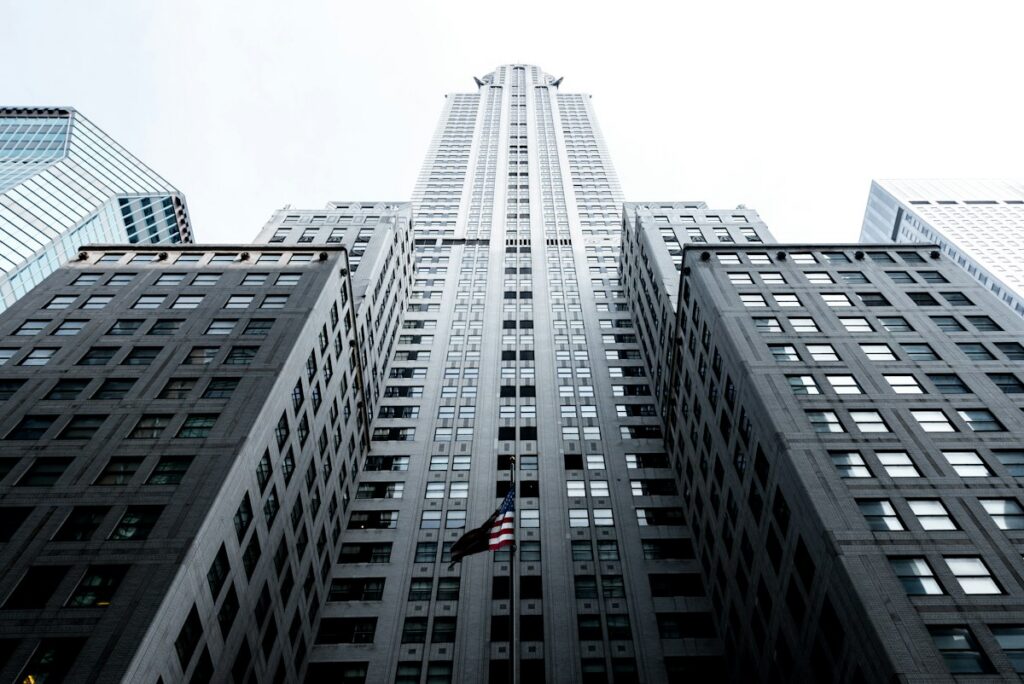
On the 61st floor of the Chrysler Building, steel eagles lean out over Midtown Manhattan. According to the college that owns the land beneath the tower, they were modeled on the hood ornament of a 1929 Plymouth, a car accessory scaled up until it became part of the skyline. On October 7, 2026, that floor became a selling point in a closely watched property deal. The deal also works as a tidy case study in what turns a building into a trophy asset.
A ground lease, not a purchase
It is tempting to read the deal as a sale. The paperwork says otherwise. Cooper Union, the New York college that owns the site, finalized a 150-year ground lease with Tishman Speyer and its institutional partners. The announced terms combine a $235 million investment in the tower with ground rent paid to the school. All of it is financed with equity, and the eagle-guarded 61st floor is set aside as an indoor-outdoor amenity for tenants. Cooper Union calls the land a lasting source of support, and the deal arrives as the school works to restore full-tuition scholarships for every undergraduate.
So the school keeps the dirt, collects the rent and lets someone else polish the gargoyles. For an institution whose landholding is meant to outlive any single tenant, it is an elegant division of labor.
Two meanings of trophy asset
Here is the contradiction. In the leasing business, “trophy” is a grade, and by that measure the category is thriving. JLL’s third-quarter 2026 research on Manhattan, as summarized by IREI, put trophy office vacancy at 4.9%, with rents of $300 per square foot increasingly common. JLL also projects that new office supply will fall to about 1.5 million square feet a year through 2029. Between 2018 and 2023 the annual average was 7.8 million.
The Chrysler Building’s numbers look different. It entered 2026 with a 14% vacancy rate, according to CoStar figures cited by The Real Deal, which also noted tenant complaints about elevator outages and mice. Tishman Speyer had sold its stake seven years earlier and came back anyway, and other bidders had pursued the lease too. Fame draws suitors. The $235 million reads as a bet that an old celebrity can be brought up to compete with the newer towers that set the grade.
Architectural scarcity nobody can manufacture
A developer can always build a newer tower. Nobody can build a second Art Deco spire on Lexington Avenue, or another wedge of Beaux-Arts stone where Broadway meets Fifth Avenue. That is the scarcity a landmark sells. It plausibly explains why such buildings keep attracting serious capital even when their operating figures look unremarkable.
San Francisco offers the West Coast version. In March 2026, Yoda Plc acquired the Transamerica Pyramid in a $691.6 million deal, Axios reported, a price Bisnow also published. Developer Michael Shvo collected $34 million as part of the transaction. Yoda’s chief executive described the property as the anchor for growing the firm’s US portfolio. A silhouette that half the world can sketch from memory makes a persuasive business card.
What the symbol costs to keep
The Flatiron Building shows the other side of the ledger. Macmillan Publishers moved out in 2019, and the owners turned the triangle into residences. On November 2, 2026, New York YIMBY reported the facade restoration finished and the first residents moving into a building that has stood for 124 years.
The shape that makes the Flatiron unforgettable can also make it awkward to use, with a pointed prow and floor plates no office planner would draw today. Owners of symbolic buildings get the publicity for free. They pay for nearly everything else, from stonework to elevators, on structures whose appeal depends on not changing very much.
Prestige in property turns out to be part grade and part story, and the two rarely share an address. The leasing market prizes new floors with excellent ventilation. The culture prizes a steel eagle borrowed from a Plymouth. Tishman Speyer and its partners are spending $235 million on the idea that one building can collect both, which is a very New York way to admire a hood ornament.
Figures are as reported on the dates given in the text.