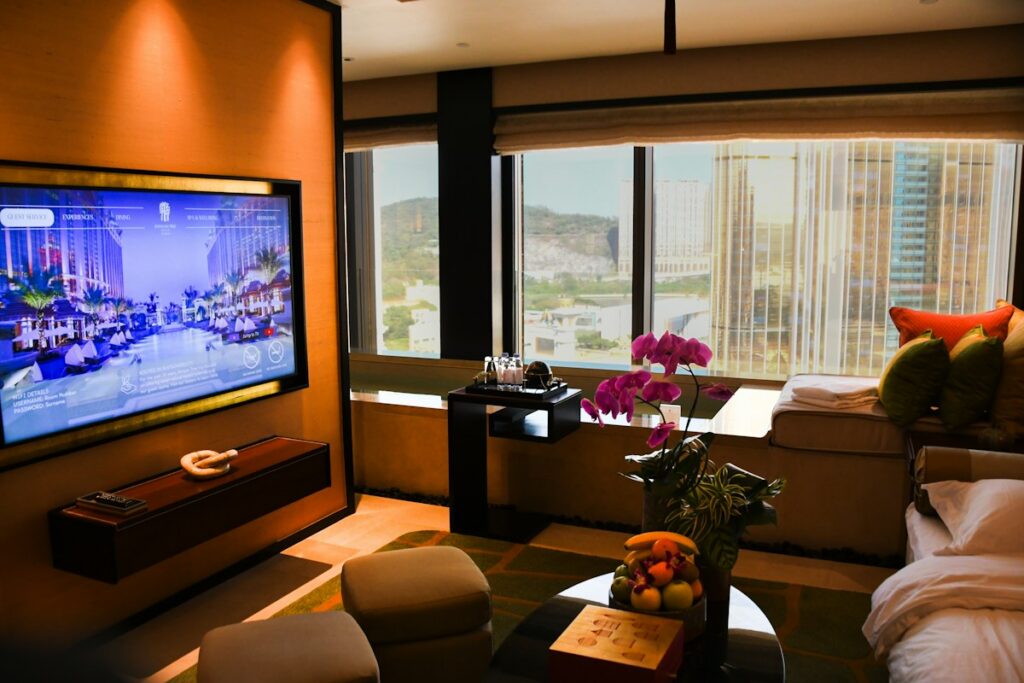
A luxury hotel suite has a feature no standard room has: a door you can close behind you without leaving the room. Past it there may be a living room nobody needs for sleeping and a dining table that may never seat anyone. None of it makes the bed any better. All of it shows up on the bill. The rate is largely a price on that gap between what a guest uses and what they pay to keep within reach.
The top of the rate card
The far end of the market is easy to find. Guinness World Records lists the five-bedroom Penthouse at The Mark, on New York’s Madison Avenue, as the most expensive hotel room, with a published rate from $114,767 a night including taxes as of April 22, 2025. Nobody would call that typical. It works more like a lighthouse, marking where the coastline of prestige sits.
Most suites live a long way below that peak. Even so, the distance between an ordinary room and the top floor is rarely one price. It is a stack of separate charges, some of which can be measured with a tape and some of which are mostly atmosphere. Pulling them apart is the interesting part.
Space is the most expensive amenity
A suite is a real estate decision made long before its first guest checks in. Every square foot handed to a lounge and a view could have been one more bookable room. Take an illustrative suite that occupies the footprint of three standard rooms. Over time it has to earn at least what those three would have earned, or the hotel would have done better with partition walls.
Seen that way, the lounge is not a bonus thrown in with the bed. It is inventory the hotel chose not to sell separately, and the nightly rate is its bet on what that choice is worth. A suite handed out as a courtesy upgrade night after night is a generous gesture and an expensive one.
What a luxury hotel suite sells besides square feet
Separate what a hotel can demonstrate from what it hopes a guest will feel. Bedrooms, floor area and the view can be checked against a floor plan. Privacy, recognition and the pleasant sense of being expected cannot, and they are where the marketing does its most careful work. They are also what lets a rate drift well above the room next door.
Service sits between the two. More rooms and more bathrooms plausibly mean more cleaning, more restocking and more staff attention, and the premium has to carry that labor along with the floor space.
Scarcity does the rest
A hotel may hold only a handful of suites, and the people who want them tend to want them for a reason: a family staying together, an entourage, a wedding weekend. With so few units, the price can be pitched at the guest who needs one most rather than at the average traveler.
The posted rate is probably firmer in public than at the desk. A suite still empty on a sold-out night earns nothing, so a smaller upgrade fee at check-in arguably beats none at all. Luxury sellers rarely advertise discounts. A quiet arrangement at the front desk would be another matter.
That returns us to The Mark. Its record is for a published rate, the number on the card, not a night anyone is documented as having paid. That is rather fitting. Some of a suite’s value comes from being booked. Some arguably comes from simply being listed, since a figure that high makes every other door on the corridor look almost modest.
Rates are as reported on the dates shown and may have changed since.