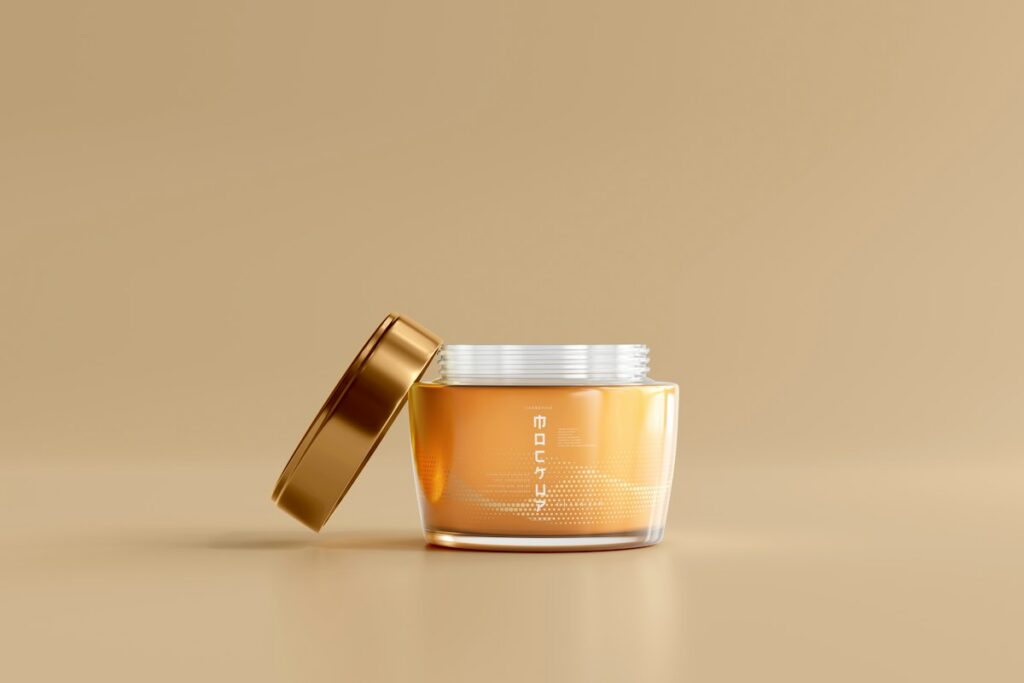
A prestige face cream tends to arrive in a jar heavier than the cream requires. The glass is thick, the lid closes with a soft, deliberate click, and the carton sometimes hides a second carton. Before anyone unscrews it, the object has made its case: this is not the drugstore.
Prestige beauty charges for that impression, and the annual reports of the companies selling it show what keeping the impression standing costs.
What the heavy jar is selling
Start with the object itself. The Estée Lauder Companies closed its fiscal year on June 30, 2026 with net sales of $15.0 billion, according to Estée Lauder. Its annual report puts gross margin for that year at 75.5%. Put plainly, the cost of the goods themselves came to roughly a quarter of what the company booked.
That quarter hides a detail worth lingering on. The filing counts samples and testers inside cost of sales. So the open pot on the counter, the one strangers dab with a fingertip, sits in the same ledger line as the product it advertises. Letting people try before they buy is not free. It is simply filed under the merchandise.
Following an illustrative $200 jar of prestige beauty
Take an illustrative $200 jar sold through a beauty chain or department store. Under the usual convention, which one consultancy describes as a keystone margin, the retailer keeps about half the shelf price, so roughly $100 reaches the brand. That 50% is a rule of thumb, not a figure any retailer publishes, and terms vary by account.
Now apply Estée Lauder’s company-wide fiscal 2026 ratios to that $100. It is a rough exercise, not a costing of any real product:
- about $24.50 for cost of sales, the goods plus the testers and samples
- about $24.80 for advertising, marketing, promotion and product development, a line that totalled $3,726 million for the year
- about $11.20 as operating profit at the adjusted 11.2% margin; on a reported basis the margin was 5.2%, closer to $5
- roughly $39.50 for everything else, from selling and administration to distribution
Two smaller lines give a sense of scale. Research and development came to $278 million, under 2% of sales, or less than $2 on the illustrative jar. Shipping and handling ran to $731 million, close to $5. Both stay out of the sum above, since the filing’s categories may overlap with the larger lines. Even so, marketing takes more than 13 times as much of the jar’s price as research does.
A high margin with a lot to cover
A 75.5% gross margin sounds lavish until the operating margin arrives. The theater lives in the distance between the two: the campaigns, the counters, the freight, the overhead of a global company.
L’Oréal shows how differently that distance can be managed. Its 2025 results put group gross margin at 74.3%, within a couple of points of Estée Lauder. Yet the group operating margin was 20.2%, and its L’Oréal Luxe division reported 22.4%. The fiscal years and portfolios differ, so the comparison is imperfect. Still, two companies with similar gross margins kept very different shares after running the business. That suggests a brand’s position sets the shelf price, while everything that happens afterward decides the profit.
Why the price tag rarely budges
That structure goes some way toward explaining why prestige brands rarely lead with discounts. Much of the spending is committed before a jar sells: campaigns booked, testers sent out, product developed. A markdown cuts into the same $100 that has to cover all of it, and it quietly tells the customer the jar was worth less than the label claimed.
In the illustrative jar, the cream and its container cost about as much as the advertising that sells them. The heavy glass makes the first impression. The rest of the price is spent making sure it lasts.
Figures are from Estée Lauder’s fiscal year ended June 30, 2026 and L’Oréal’s 2025 results; the $200 jar is illustrative.