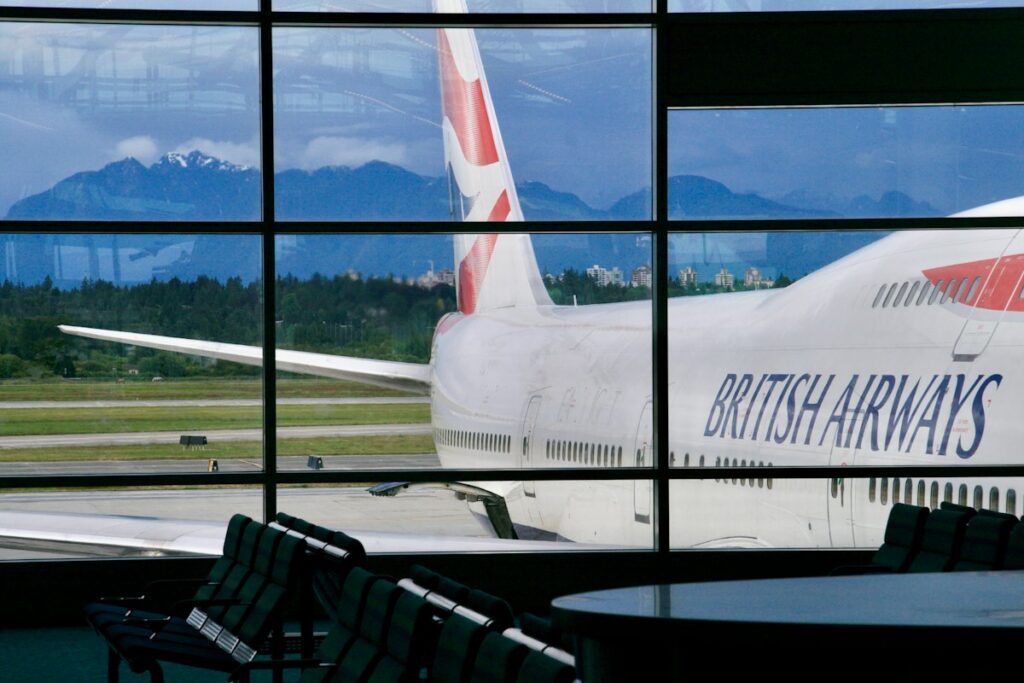
The most revealing sound in a big airport may be the polite beep at a lounge reception desk, where a scanned boarding pass either admits a traveler past the glass or sends them back toward the food court. That beep sorts one crowded building into two economies: one where waiting is simply a cost, and one where it has been packaged as a product. An airport lounge works as a status marker partly because everyone at the gate can see the door, and few can see much past it.
An airport lounge that began as an invitation
Business Traveller‘s history of the lounge starts in 1939. That year American Airlines opened a club at New York’s municipal airport, the one now called LaGuardia. Entry was by invitation. Favored passengers were styled “admirals,” nobody could apply, and nobody paid dues. Prestige was something the airline handed out, not something a customer could buy.
Demand spoiled the arrangement. Nearly three decades on, by the same account, American gave up the private-club model because too many people wanted in. Every lounge operator since has inherited some version of that problem.
What the room actually sells
Set aside the mood lighting and a lounge offers a handful of practical things: a predictable use of dead time, a better chair, fewer people and staff paid to help. The J.D. Power 2025 US Airport Lounge Benchmark, whose results were also reported by The Moodie Davitt Report, surveyed 1,430 respondents in September and October 2025. It ranked “value of experience” as the strongest driver of satisfaction, with staff second and food and drink third. Satisfaction also climbed with time spent inside, from 758 on the study’s 1,000-point scale for visits of 31 to 60 minutes to 797 for stays of two hours or more.
Those scores measure perception, not proof that a lounge improves a trip. A traveler with two spare hours may simply have arrived calmer. Still, the pattern hints that the product is the hour itself as much as anything poured or plated during it.
Keeping a popular door from becoming a crowd
Exclusivity turns out to be a maintenance job. At Delta, one of the doors runs through credit cards, and in 2025 the airline started counting. Under its Sky Club rules, effective February 1, 2025, holders of the US-issued Platinum Card from American Express get 10 visits a year and Delta Reserve cardholders get 15. Unlimited access returns only after $75,000 in eligible purchases in a calendar year.
The definition of a visit does quiet work too. Every entry within a 24-hour window counts as one, so a long layover with a wander to the gate and back costs a single visit. A hypothetical Platinum cardholder taking one round trip a month would use up the 10 by May. The effect is to protect a ratio of people to seats, the same scarcity instinct behind why luxury brands rarely discount.
Above the lounge, another rope
Above the busy premium room, a pricier tier has taken shape. PS runs private terminals for passengers on ordinary commercial flights, a model Robb Report described as giving them the perks of a private-jet terminal without the private jet. As of late October 2026, the company’s price list put its shared space, The Salon, at $1,295 per person one way for non-members, or $995 with a $1,250 Salon membership. A Private Suite was listed at $4,950 for non-members and $3,650 for holders of the $4,850 All Access membership.
PS can document a separate facility and a published fee schedule. The feeling those fees are meant to buy is harder to verify, though the shape of the list is telling: the price rises as the room shrinks, from a shared salon to a suite of one’s own.
The amenity nobody can install
Designers can specify the stone, the lighting and the runway view. Kitchens can be enlarged and showers added. The quality travelers seem to prize most, a little distance from everyone else, behaves differently from the marble. It thins out each time another person is persuaded to pay for it. A lounge, in the end, is in the business of selling an absence, and every successful sale uses a little of it up.
Prices and access rules are as published by PS and Delta in late October 2026 and change often.