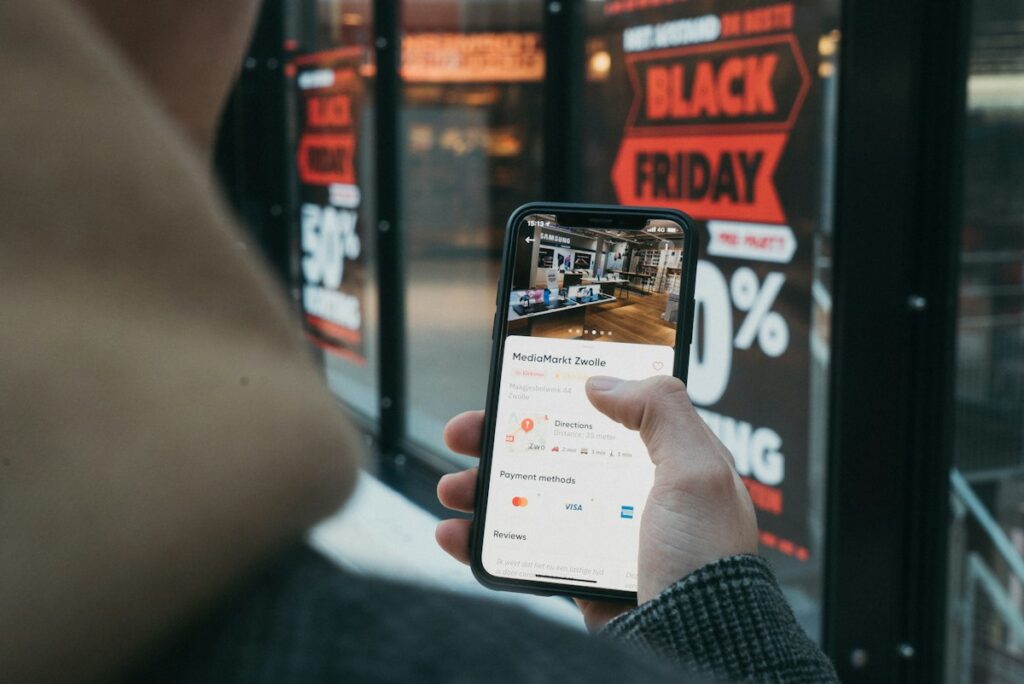
The basket has been sitting there for 20 minutes, mostly ignored, when a thin red banner slides in above it: offer ends in 00:14:59. Then 00:14:58. Nothing about the jacket has changed. Same price, same size, same pockets. What changed is the question. A minute ago it was whether you wanted the thing. Now it is whether you can decide before the digits run out, and countdown timers are built to make that second question feel like the only one on the page.
Countdown timers and the question they swap in
The design intent is not mysterious. A clock turns a purchase into a deadline, and deadlines tend to crowd out comparison. The more interesting evidence concerns a plainer matter: how often the clock is telling the truth.
In 2019, a team of computer scientists with Arunesh Mathur as lead author published a study built on an automated crawl of about 53,000 product pages across roughly 11,000 popular shopping sites. They were cataloguing manipulative design. They found urgency features, either ticking countdowns or static “limited time” messages, on 437 of those sites. When they checked how the clocks behaved, they judged 157 timers on 140 sites to be deceptive. The study’s limits are worth noting: it counted the timers, not the sales they produced.
The regulators started counting too
Consumer agencies have since given the trick a name. A September 2022 Federal Trade Commission staff report lists the “baseless countdown timer,” a clock that simply vanishes or starts over once it reaches zero. The report reflects the views of agency staff and is not a rule. Its sample banner, “Offer ends in 00:59:48,” will look familiar to anyone who has lingered at checkout.
Europe went looking at scale. On January 30, 2023, the European Commission and consumer authorities from 23 member states, Norway and Iceland published the results of a sweep of 399 online shops. They found at least one of three targeted dark patterns on 148 of them and fake countdown timers on 42. That works out to roughly one shop in ten running a clock that did not mean what it said.
What happens when the clock hits zero
The cleanest way to test an urgency claim is to wait. That is more or less what the UK’s Competition and Markets Authority did with Wowcher, the daily-deals site. According to the regulator’s announcement in 2024, its concern was that products stayed available at a similar price after the timer ended. Wowcher responded with commitments to change how it presents urgency.
The same announcement covered a separate issue: refunds of more than £4 million to 870,000 customers over its “VIP membership” scheme. The mechanism was different, but it shows that urgency was not the only design choice the regulator looked at.
The quieter number on the sale sticker
A timer tells you when. The discount tells you how much, and a percentage off needs two prices. The “before” figure is the seller’s choice, which is why the EU puts a floor under it. Under the bloc’s price indication rules, a trader announcing a reduction must use as its prior price the lowest price it charged over a period of at least 30 days beforehand.
The rule’s edges were tested in Germany, where a consumer association challenged how an Aldi Süd advert calculated its advertised reductions. On September 26, 2024, the Court of Justice of the EU gave a preliminary ruling, set out in its published judgment, that percentage cuts and similar promotional claims have to be calculated from that 30-day low, not from a higher price picked for the occasion. The judgment interprets EU law, so its reading applies to sellers across EU markets. The German court applies it to the case in front of it.
Put the two numbers side by side and the sale starts to look like a pair of dials the shop sets itself, one for time and one for size. Regulators have spent recent years checking whether either dial is connected to anything. Often enough to fill their reports, the answer arrived at 00:00:00, when the offer quietly carried on.
Figures and enforcement actions are dated to the reports and rulings cited.