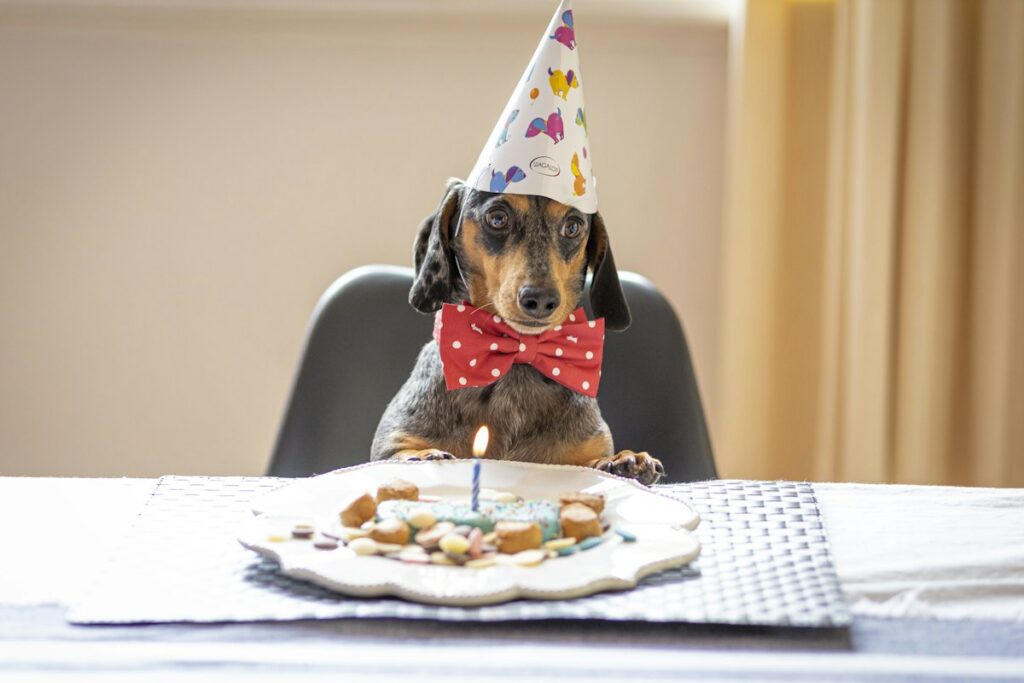
The most useful thing a pet store collects on a dog’s birthday isn’t the cake money. It’s the date. At Petco, the free birthday treat for a member’s pet comes with two conditions, spelled out on the Petco Perks page: fill out the pet’s profile, and opt in to marketing emails. One biscuit buys a birthday on file and permission to bring it up every year.
That trade explains a lot about the business of pet birthdays, a niche that looks frivolous from outside and fairly sensible from inside. Nobody is selling a revolution. They’re selling small, repeatable reasons to show up.
Who actually spends on pet birthdays
Count the evidence carefully, since much of it comes from sellers. In 2025, PetSmart said its own data showed 81% of pet parents celebrate a birthday or a “gotcha day”, the anniversary of bringing a pet home, and that 68% would like to do more. That’s the retailer’s own survey, released to announce a retail event.
A second data point comes from a greeting card company. A Moonpig survey of 1,000 UK pet owners, reported in April 2025 by Dogs Today and others, found 64% celebrate a pet’s birthday or milestone. The age gap was the real story: 83% of Gen Z respondents and 79% of millennials said they had celebrated, against 39% of those 55 and older. Just over half had signed a card on the pet’s behalf, which a card company was presumably pleased to learn.
The wider wallet is large and a little cautious. The American Pet Products Association put U.S. pet spending at $158 billion in 2025, up 3.7%, while 22% of owners said they spent less on their pets that year. Birthdays sit at the small-ticket end of that market, where a treat or a coupon has to make sense.
Why a chain throws a party for free
PetSmart’s answer is a monthly Birthday + Gotcha Bash at all of its stores in the U.S., Canada and Puerto Rico, with free treats, games and a $5 birthday coupon for attendees, according to the company’s 2025 announcement.
The monthly format is a neat bit of staffing logic. One event covers every pet born that month, so a store runs twelve parties a year instead of an unpredictable stream of them. Birthdays also don’t bunch up the way holidays do, so one data field spreads reasons to visit across the calendar. The free treat is the cost of the invitation; the shopping trip around it is where the coupon is meant to earn its keep.
Petco’s version carries a quieter limit. Birthday treat emails go to every pet enrolled in its paid Premier tier, and to up to three pets for everyone else. A household with four cats meets the membership pitch at exactly the moment it feels a little left out.
The small maker’s version of the party
In a 2026 seller profile published by Amazon, which has an obvious stake in the story, Puppy Cake founder Kelly Costello started in 2007 in a one-bedroom Pittsburgh apartment and moved to Fulfillment by Amazon in 2010. The page says the company reached $1 million in revenue in 2018, now works from a 20,000-square-foot facility in Porterville, Pennsylvania, and makes 65% of its revenue through Amazon’s store.
That is revenue, not profit; the profile gives no margins. What it does show is the operating model. Handing storage and delivery to Amazon’s warehouses let the business grow, by its account, without hiring more people or adding space.
The tradeoff behind the candles
The chain hands out treats and coupons in exchange for a date and an inbox, and that permission only pays off if the emails bring people back for more than the freebie. The small maker gains national reach through one marketplace, which also means most of its sales happen on someone else’s storefront, under someone else’s rules.
The dog, for the record, has no idea what day it is. The owner does, and that one remembered date is the product both businesses are really built to sell around.
Figures and program terms are as reported by the cited sources on the dates given.