The biggest earner in one famous sandwich shop’s family of businesses ships in a cardboard box. In December 2025, Crain’s Detroit Business reported that Zingerman’s Mail Order, the shipping arm of the Ann Arbor deli’s group, was set to bring in $6 million in the seven days before Christmas. That is roughly a quarter of its annual revenue in a single week, handled by an operation of about 800 employees. By Crain’s account, mail order had become the top earner among the Zingerman’s businesses, ahead of the deli that made the name.
Zingerman’s is an outlier. The pattern it exaggerates still turns up in food shops of every size. The counter is where customers meet the business, and it is not always where the business finds room to breathe.
The thin arithmetic of a sandwich shop
Restaurant margins are narrow, which is a polite way of saying they are barely there. Point-of-sale company Toast put the average restaurant profit margin at 3% to 5% in 2026. As a rule of thumb, about a third of revenue goes to ingredients and another third to labor. A quick illustration, not a reported figure: at a 4% margin, a $12 sandwich leaves 48 cents once everyone else has been paid.
Then there is the clock. A lunch-focused shop pays rent all day, yet much of its trade arrives in a short midday rush. The slicers, ovens and trained staff sit partly idle on either side of it. In this column’s reading, side revenue is less about diversification than about making hours and equipment the shop already pays for earn their keep.
Catering: twenty-five lunches, one invoice
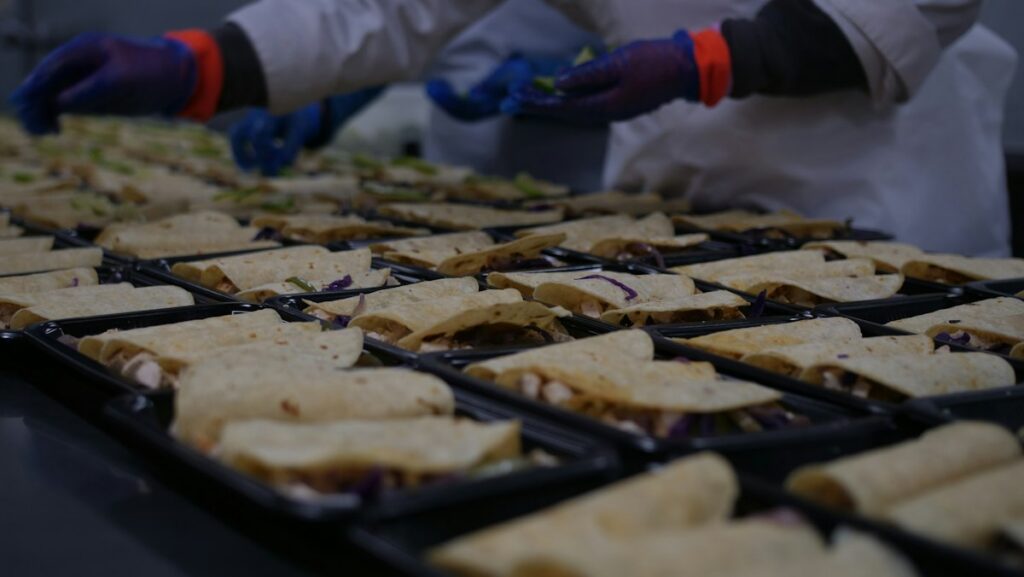
Catering is the obvious first step because it sells the same food in bulk. Marketplace ezCater says that as of 2026, the average order on its platform was $420 and fed 25 people. It also says 70% of employees who first try a restaurant through a work lunch later order from it on their own. Those are a platform’s claims about its own business. The logic is easier to accept: a catering drop is a free sample that arrives with an invoice.
The costs are less photogenic. Someone has to answer order emails before opening, stock trays and lids, and build two dozen lunches to a delivery window. For office orders, that window tends to fall at lunchtime, exactly when the counter is busiest. One big order can make the day. It can also turn the people standing in line into the side business.
The shelf by the register
Retail works for a related reason: plenty of customers were never planning to sit down. The National Restaurant Association reported in 2025 that nearly 75% of restaurant traffic was off-premises. For 58% of limited-service operators, off-premises orders made up a bigger share of sales than in 2019. A jar of house pickles is, in effect, takeout with a longer shelf life.
Packaged goods bring chores of their own: labels, inventory that ages, shipping and stock nobody buys. According to Crain’s, Zingerman’s mail order ships the breads, cured meats, cheeses and coffee the deli is known for. A quarter of a year’s revenue in one week is a remarkable result. It is also a great deal riding on a few days of couriers behaving.
Subscriptions and the trouble with “unlimited”
Memberships try to turn occasional visits into a routine. A well-documented example comes from a national chain rather than a corner shop, but the mechanics carry over. As Nation’s Restaurant News reported, Panera launched its Unlimited Sip Club in 2022 at $10.99 a month for self-serve drinks. By 2026 it cost $14.99. Then the chain retired the word “unlimited,” capping members at 30 self-serve drinks a month starting in August 2026. By the trade publication’s count, about four drinks a month covered the fee.
The reasonable interpretation is that the drinks were never quite the product. A cheap pour customers serve themselves is a reason to walk in, and the hope is that a sandwich walks out with them. A cap is what happens when that reason becomes more popular than the pricing assumed.
Every extra line borrows from the same kitchen
Trays, jars and memberships all lean on things the shop already pays for: recipes, reputation, staff. That is the appeal. It is also the catch, because each new line competes for the same prep tables, the same hours and the same manager’s attention. One way to read the arrangement is that the counter becomes a showroom for everything else. The complication, usually discovered around noon, is that the showroom still has to make lunch.
Figures are dated as reported by the linked sources and may have changed since publication.